





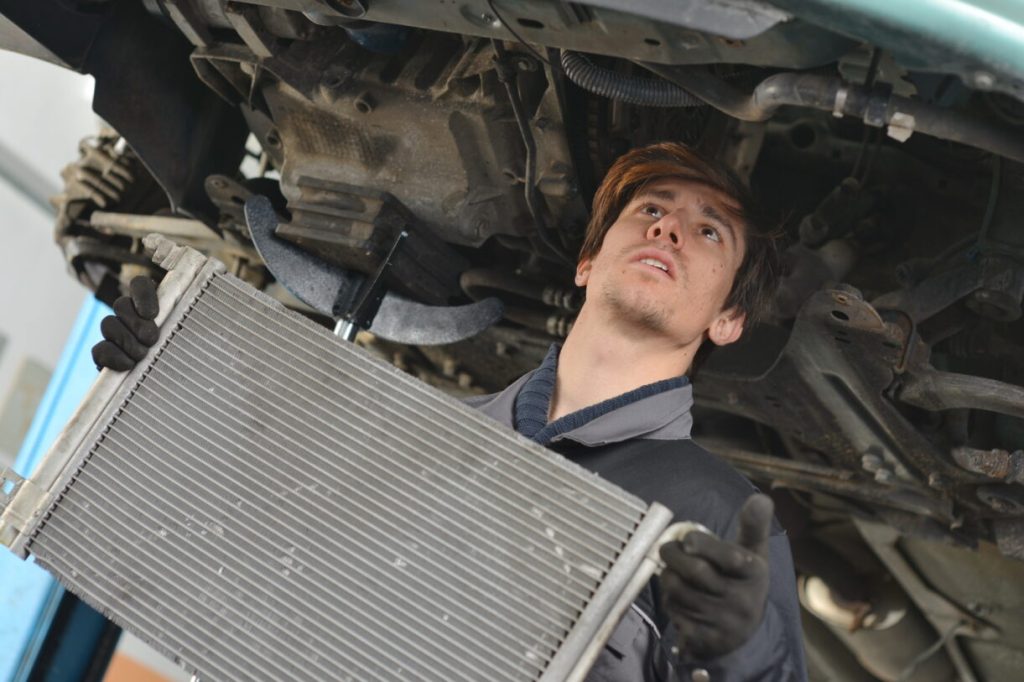
Without a functioning radiator, your car’s engine would rapidly overheat and break down. The radiator serves the important function of drawing heat from the coolant as it circulates throughout the engine compartment, keeping the temperature under control. Here are five common signs of a malfunctioning radiator that should prompt you to visit Coughlin Chevrolet of Pataskala’s Service Department right away for radiator repair.
Overheating Engine
The most urgent indication of a faulty radiator is the engine overheating. This will cause the temperature gauge on your instrument panel to shoot upward into the red while your engine steadily loses power. You might also hear odd knocking and ticking sounds from the engine as moving components start to struggle against each other.
If the temperature rises high enough to boil the coolant, you’ll also see white vapor rising from under the hood. In the case of overheating, it’s best to pull over safely and not drive again until the radiator has been repaired. Otherwise, your engine could suffer catastrophic damage.
Rusting Radiator
Radiators are susceptible to rust over time, especially in particularly wet or humid climates. If you notice large patches of external rust building on your radiator, you may need to have it professionally cleaned or replaced. Radiators can sometimes also rust internally, which will usually cause the coolant inside the coolant reservoir to turn a rusty brown color.
Leaking Coolant
Excessive rust, a damaged radiator cap, or cracks in the hoses or hose connections can occasionally allow coolant to leak from a radiator. If this happens, you might notice a brightly colored fluid puddling under your car. A coolant leak must be repaired at once to prevent the engine from overheating.
Damaged Radiator Fins
You can visually check your radiator for signs of damage to the fins, which are the weakest part of the radiator. If your radiator’s fins are broken or dented, you may need a new radiator.
Malfunctioning Cabin Heater
It might be surprising to hear that the cabin heater in many cars is connected directly to the engine’s cooling system. As the radiator expels heat from the coolant, the warm air generated is blown into the cabin to warm you and your passengers. So if your cabin heater ever stops blowing warm air, the radiator might be to blame.
Flush Your Radiator Frequently at Your Chevy Dealer
Radiators need to be flushed periodically to get rid of contaminants and refresh aging coolant. A general rule of thumb is to flush a radiator every 30,000 miles, but you can check the owner’s manual for your particular Chevy model to find out the precise interval to follow.
Visit Coughlin Chevrolet of Pataskala in Pataskala, OH today to have your radiator inspected and repaired. Our award-winning dealership has a dedication to upholding the utmost standards in customer care.
Connect with us


Recent Blog Entries
- Coughlin Chevrolet of Pataskala Car Show 2026: Join Us for One of Ohio’s Best Free Car Shows!
- Chevy Traverse vs. Tahoe: Which SUV Fits Pataskala, OH Families Best?
- Chevy Silverado Trim Levels Explained for Pataskala, OH Drivers
- Chevrolet EV Lineup: What You Need to Know
- 2026 Chevy Silverado vs. Colorado: Truck Comparison